
space exploration games with procedural worlds can feel either endlessly fresh or strangely repetitive, and the difference usually comes down to how generation is used, not how big the galaxy looks on the store page.
If you have ever bounced off a “near-infinite universe” after a few hours, you are not alone, most players are not actually asking for more planets, they want more meaningful reasons to land, scan, mine, fight, trade, or simply drift and stare.
This guide breaks down what procedural world generation does well, where it tends to fall apart, and how to choose a game that fits your mood, chill exploration, survival pressure, story-driven discovery, or a sandbox you can live in for months.
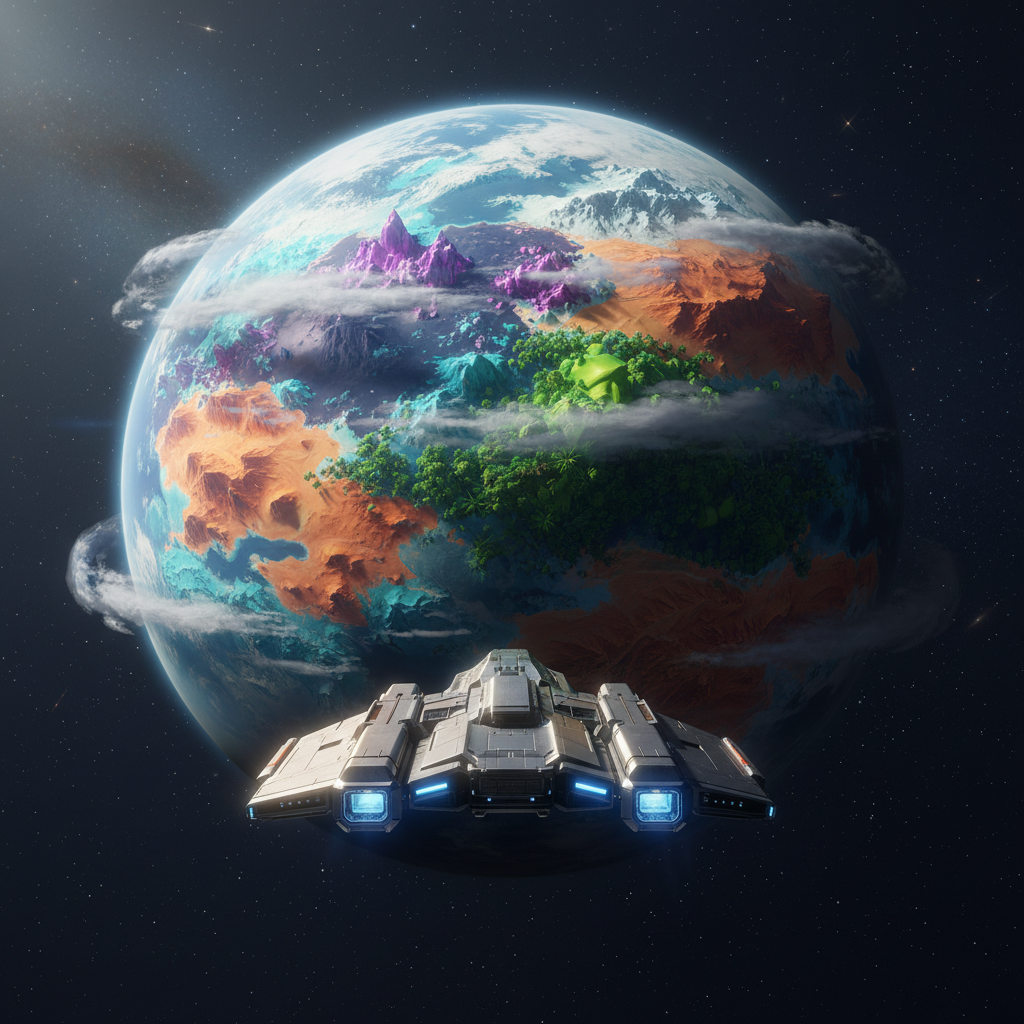
What “procedural worlds” really mean in space games
Procedural generation usually means the game uses rules and random seeds to build planets, systems, terrain, loot, encounters, or missions, instead of placing everything by hand. In practice, most titles mix both: algorithms handle scale, while handcrafted content anchors pacing.
When it works, you get surprise and variety at low cost to the developer. When it misses, you get “same planet, different paint,” plus chores that feel infinite because nothing ever resolves.
- Procedural terrain: mountains, caves, rivers, hazards, gravity, weather.
- Procedural points of interest: ruins, outposts, anomalies, distress signals.
- Procedural rewards: crafting mats, ships, upgrades, artifacts.
- Procedural narrative wrappers: contracts, bounties, faction tasks.
According to NASA, planets and moons in our own solar system show extreme variety in geology and atmosphere, which is part of why players expect alien worlds to feel distinct. Procedural systems can imitate that variety, but they still need strong design constraints to avoid “noise without identity.”
Why some galaxies feel magical (and others feel copy-pasted)
Most burnout in space exploration games with procedural worlds comes from a mismatch between what the generator produces and what the gameplay loop rewards. Bigger is not better if your actions do not change anything that matters.
Common reasons exploration stops feeling rewarding
- Biome templates repeat too fast, you recognize the pattern within a session.
- Scanning and mining lack tension, no meaningful trade-offs, just time spent.
- Points of interest are shallow, you land, loot, leave, nothing connects.
- Progression is linear, new gear only raises numbers, not options.
- Travel becomes menu time, lots of warping with little “in-between.”
On the flip side, procedural worlds shine when they support stories you can retell, a storm forces an emergency landing, a pirate ambush changes your route, you discover a rare resource that reshapes your build, or you stumble into a weird anomaly that becomes your new goal.
Quick self-check: which procedural explorer fits you?
Before you shop, it helps to be honest about what you mean by “exploration.” Many people say exploration but want one specific ingredient, cozy vibes, survival stakes, ship-building, trading, or discovery logs.
- If you want relaxed discovery, look for strong traversal tools, photo mode, base building, and low punishment for mistakes.
- If you want danger and planning, favor survival meters, harsh environments, limited inventory, and risk-based decisions.
- If you want a living economy, prioritize factions, trading systems, smuggling, reputation, and ship loadouts.
- If you want “weird science” moments, look for anomaly systems, rare events, deep scanning, and lore artifacts.
- If you get bored fast, pick games where procedural generation affects missions, enemies, and upgrades, not only terrain.
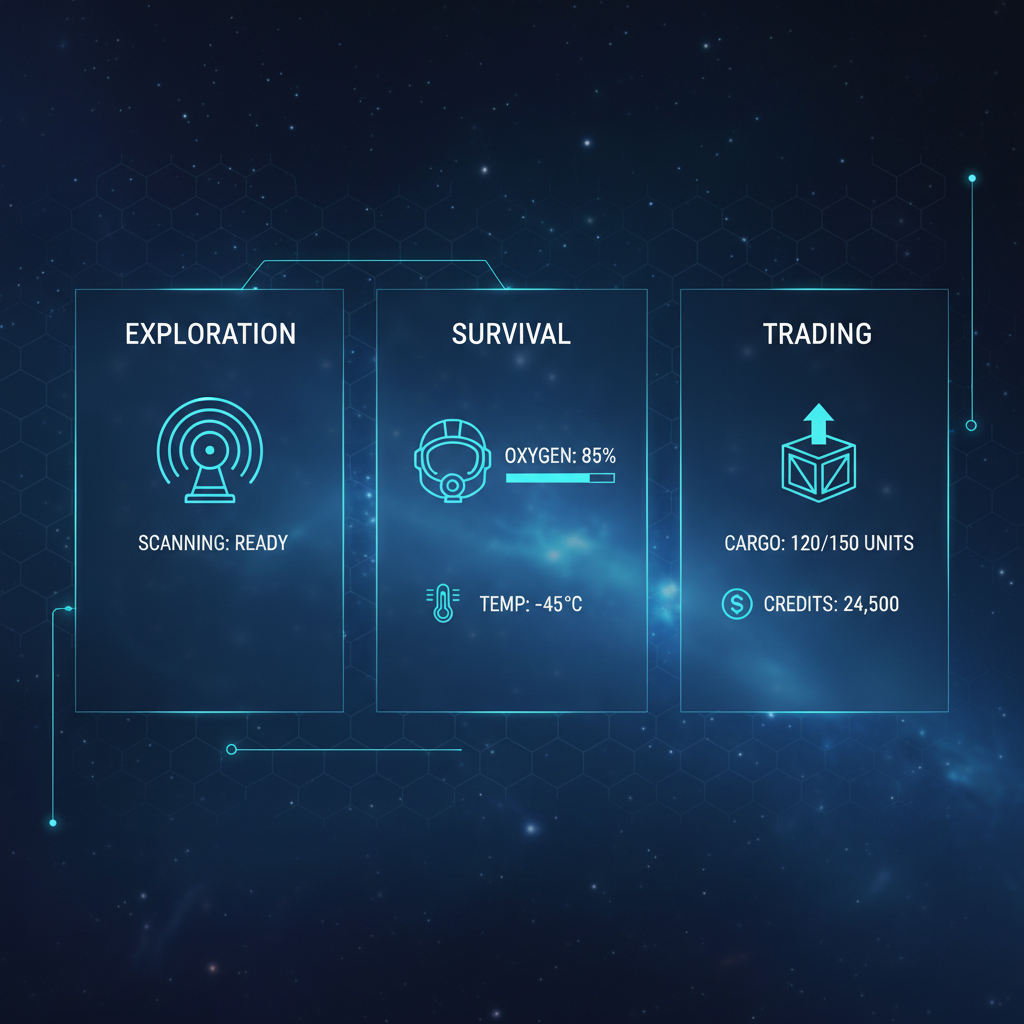
A practical comparison table: what to look for (and what it costs)
Not every game needs every feature. This table helps you translate marketing claims into real player impact, especially when evaluating space exploration games with procedural worlds on Steam or console stores.
| What you see in trailers | What it usually means | What to check before buying |
|---|---|---|
| “18 quintillion planets” | Huge scale, variable surface generation | Do planets have unique hazards, fauna behavior, or meaningful POIs? |
| “Endless missions” | Procedural quest templates | Are objectives varied, and do outcomes change factions, gear, or routes? |
| “Deep crafting” | Resource loops drive progression | Is crafting optional, or mandatory grind to access content? |
| “Survival realism” | Fuel, oxygen, temperature, ship damage | Can you tune difficulty, and does survival create interesting decisions? |
| “Living universe” | Simulation, AI traffic, economy, events | Do systems react to you, or just run in the background? |
How to get more “real exploration” out of the game you already own
You can often fix the “samey” feeling without switching games. The trick is to change the incentives you follow, not only the location you visit. Many procedural explorers reward player-set constraints, and that is where the fun hides.
Try these play patterns (they work in many titles)
- Pick a research theme for one week: storms, caves, ocean worlds, ancient ruins, ringed planets, whatever your game supports.
- Stop optimizing credits per hour: it makes every planet a spreadsheet and kills curiosity.
- Build a “long-range” ship: prioritize fuel, scanning, landing safety, storage, and escape tools over raw damage.
- Use a discovery journal: one screenshot and one note per system, even a simple naming scheme helps your brain treat places as distinct.
- Play with one hard rule: no fast travel, permadeath-lite, or only trading and no mining, constraints create stories.
According to ESA, space exploration missions rely heavily on constraints like power, fuel, and communication windows, and those limitations shape mission planning. In games, optional constraints can do the same thing, turning “random planets” into “routes with consequences.”
Common mistakes that make procedural worlds feel worse
This part is blunt on purpose, because these are the habits that quietly drain enjoyment from space exploration games with procedural worlds, even when the underlying game is solid.
- Chasing “completion” on infinite content: you cannot finish it, so aim for memorable runs, not total coverage.
- Turning every session into a grind: if your loop is only mining and selling, the generator becomes background noise.
- Ignoring difficulty sliders: too easy turns planets into postcards, too hard makes you avoid risk and stick to safe routes.
- Expecting handcrafted storytelling everywhere: procedural games usually deliver emergent stories, not authored arcs every hour.
- Not learning one deep system: trading, building, scanning, navigation, combat, pick one and go deep, depth creates variety.
When it’s worth seeking help: guides, mods, or accessibility options
If you feel stuck, it is often not a “skill issue,” procedural explorers can be opaque, with layered crafting trees, survival systems, and navigation UI that assumes genre familiarity.
- Use community guides when a mechanic is unclear, especially economy loops and upgrade priorities. They can save hours of trial and error.
- Consider light mods for quality-of-life, like better inventory sorting or clearer star maps, if you play on PC.
- Use accessibility settings if motion, text size, or color contrast causes discomfort. If symptoms persist, it may help to consult a medical professional.
- Ask for recommendations with specifics, what you enjoyed, what bored you, session length, preferred challenge.
Key takeaways and a simple next step
The best procedural exploration is less about infinite space and more about interesting decisions that keep happening as you travel. If your current game feels flat, change the goals you chase and add one constraint that forces you to improvise.
- Key takeaway: Procedural worlds stay fun when they affect rewards, risk, and routing, not just terrain.
- Key takeaway: Your playstyle choice matters as much as the generator, cozy and survival need different systems.
- Next step: Pick one theme for your next three sessions, build your ship around it, and stop measuring progress only in currency.
FAQ
What are space exploration games with procedural worlds best at?
They are usually best at scale, surprise, and replayability, especially when travel, discovery, and progression interact. They are less consistent at delivering tightly authored story beats every hour.
Why do procedural planets feel similar after a while?
Most generators rely on reusable biome and POI templates. If the game does not add unique hazards, behaviors, or mission consequences, your brain starts pattern-matching and the novelty drops.
How can I tell if a game has “meaningful” procedural generation?
Look for systems where the planet affects what you can do, storms change combat or scanning, resources unlock different builds, factions respond to choices, and routes force trade-offs like fuel versus safety.
Are procedural worlds better for solo play or co-op?
Both can work. Solo tends to highlight atmosphere and planning, co-op often makes repetitive tasks feel better because teamwork creates its own stories, even when missions are simple.
Do “infinite missions” mean endless fun?
Not automatically. Endless missions help if objectives vary and outcomes matter, but if they are mostly fetch or kill templates, you might prefer fewer missions with deeper consequences.
What settings should I tweak first to improve exploration?
Start with difficulty and travel friction, fuel usage, survival meters, inventory limits, and scan range. Small changes can turn wandering into routing and make each landing feel earned.
Is procedural generation the same as random generation?
It is related but not identical. Procedural generation typically uses rules that can produce consistent, structured results from a seed, while “random” is often used loosely to mean unpredictable.
If you are trying to pick between a few space exploration games with procedural worlds, it often helps to describe your ideal session in one sentence, “I want calm scanning and base building,” or “I want risky runs and tough repairs,” and then match features to that, rather than chasing the biggest universe.