
Story rich walking simulator games are perfect when you want a strong narrative without combat stress, but they can feel hit-or-miss if you pick the wrong one for your mood.
The good ones make “walking” feel purposeful, using environment, voice acting, and small choices to keep you curious. The bad ones feel like empty hallways with lore dumps.
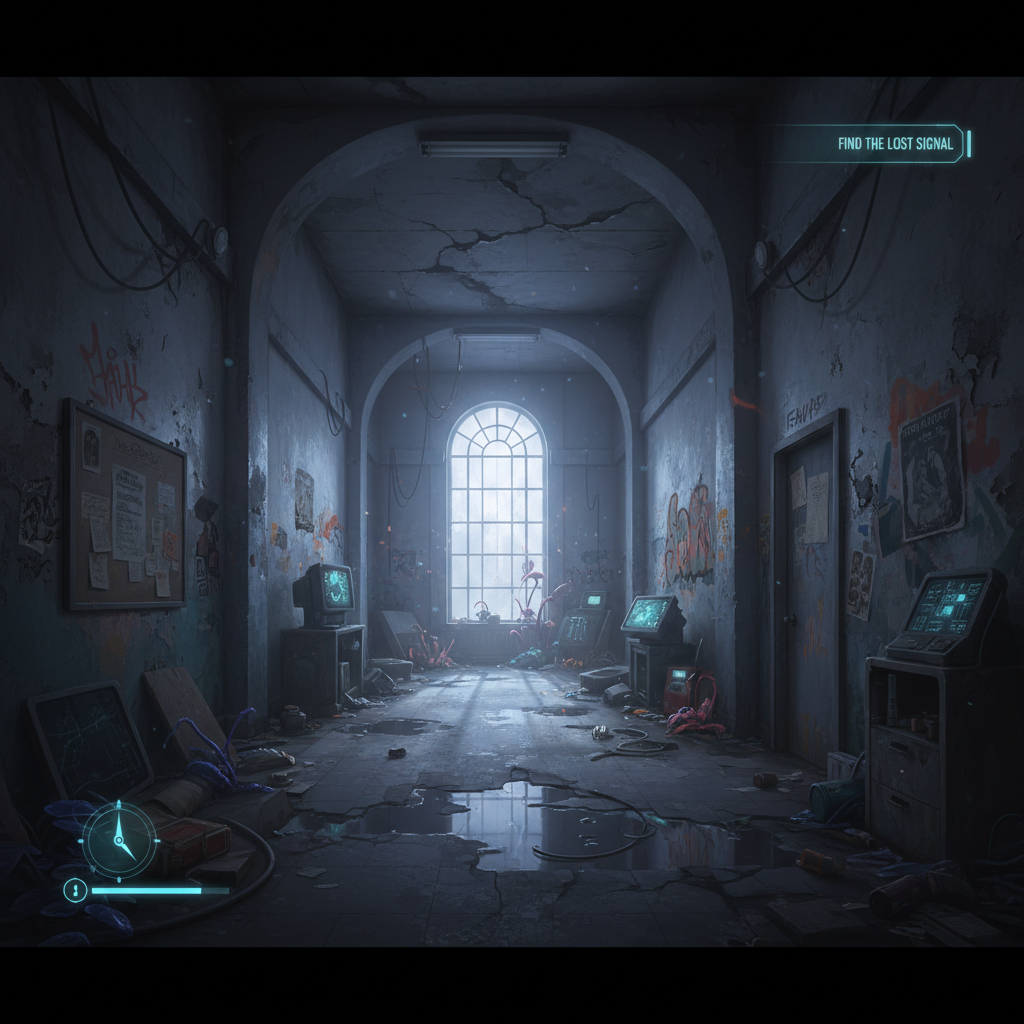
This guide focuses on how to spot the difference fast, what features actually matter, and a short, practical shortlist so you can land on something you will finish, not just install.
What “walking simulator” really means (and why that label annoys people)
In practice, “walking simulator” usually means a narrative-first game where movement and exploration replace traditional skill checks like aiming or combos. You still “play,” just in a different way.
Some fans dislike the term because it sounds dismissive, as if exploration and story are not real mechanics. But the better way to frame it is this: these games often shift challenge from reflex to attention, noticing details, connecting themes, and sitting with the pacing.
According to IGDA (International Game Developers Association), game design includes a wide range of interaction styles beyond combat, which helps explain why narrative exploration games keep growing as a category.
Why these games feel “story rich” when they work
Not every narrative exploration title is actually story rich. The ones that stick tend to share a few craft choices that show up again and again.
- Environmental storytelling: you infer plot from spaces, objects, and changes, not just dialogue.
- Controlled pacing: it knows when to slow down, and when to give you a reveal or new location.
- Performance quality: voice acting, sound design, and music do heavy lifting in emotional scenes.
- Clear narrative question: you keep moving because you want the answer, not because a quest log says so.
- Meaningful interaction: reading, listening, inspecting, choosing dialogue, or light puzzles that support the theme.
If you bounce off this genre, it is often because the game leans too hard on exposition, or it expects you to care before it earns the moment.
A quick table: pick the right vibe in 30 seconds
Choosing by mood matters more here than in most genres. Use this as a practical filter before you buy or download.
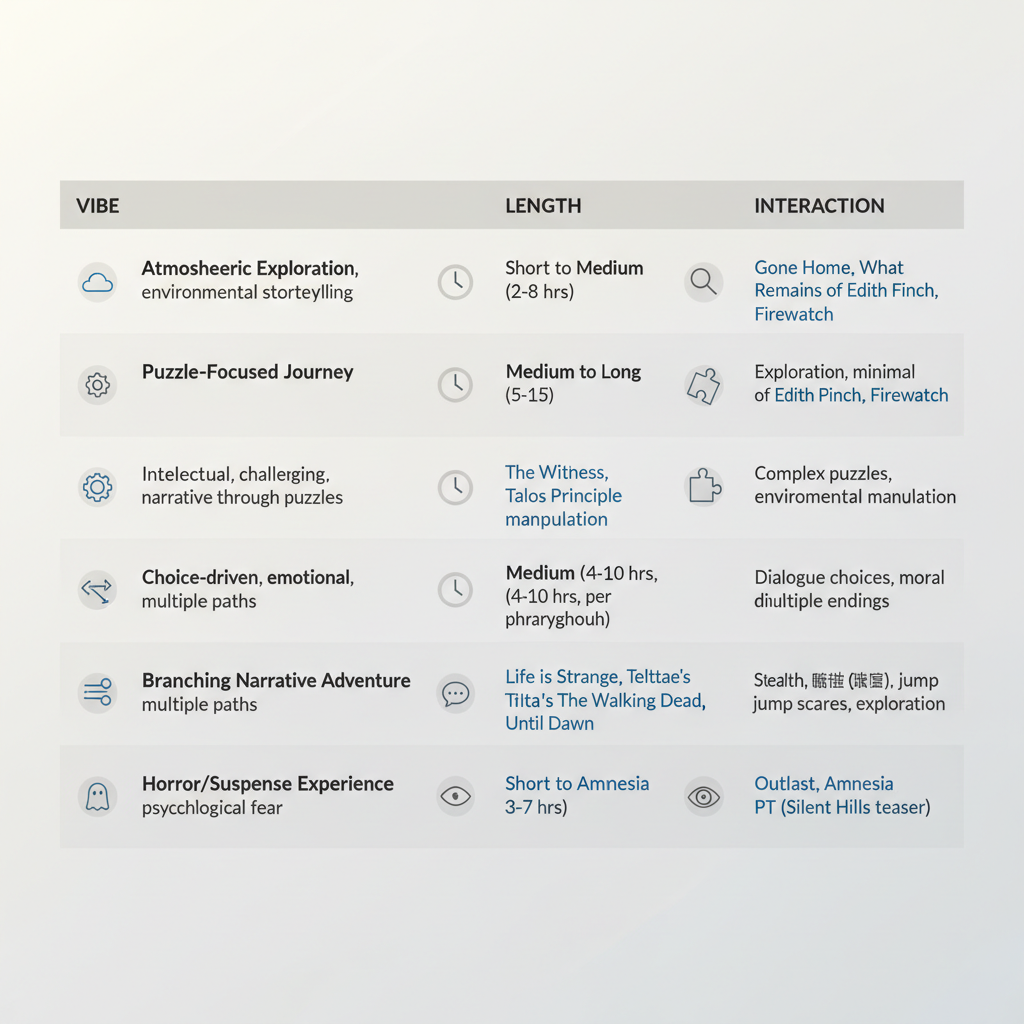
| What you want tonight | Look for | Typical length | Interaction level |
|---|---|---|---|
| Emotional, intimate story | Strong voice acting, personal stakes, small cast | 2–6 hours | Low to medium |
| Mystery you can unravel | Clues in rooms, optional notes, timeline building | 4–10 hours | Medium |
| Light horror without heavy combat | Atmosphere, stealth-lite, scripted tension | 3–8 hours | Medium |
| Beautiful exploration and vibes | Striking art direction, photomode, minimal text | 1–5 hours | Low |
| Choice-driven dialogue focus | Conversation systems, branching scenes, replay value | 6–15 hours | Medium to high |
Once you know your “why,” finding story rich walking simulator games gets much easier, because you stop forcing a slow-burn title to entertain you like an action game.
How to tell if a game is for you (a real-world self-check)
Before you commit, do a quick gut-check. This genre rewards matching expectations to the design.
- You will probably enjoy it if you like reading notes, listening to audio logs, and piecing things together.
- You might struggle if you need frequent fail states, skill progression, or constant new mechanics.
- You should check accessibility options if motion sickness hits you in first-person games; many titles offer FOV sliders, head-bob toggles, or camera smoothing.
- You may want shorter games if you often abandon story games halfway, aim for 2–5 hour experiences.
Also, be honest about your tolerance for ambiguity. Some narrative exploration games explain everything, others end with a question mark on purpose.
Recommended story rich walking simulator games (curated starter list)
This is not a “complete list,” because dumping 50 titles is how people end up buying nothing. These picks are widely recognized in the narrative exploration space, cover different tones, and usually communicate their intent clearly.
- What Remains of Edith Finch (anthology, inventive storytelling, emotionally heavy in places)
- Gone Home (domestic mystery, environmental clues, short and approachable)
- Firewatch (character-driven dialogue, strong sense of place, deliberate pacing)
- The Stanley Parable (meta narrative, humor, replayable routes, commentary on choice)
- Everybody’s Gone to the Rapture (slow, atmospheric, audio-driven storytelling)
- Dear Esther (minimal interaction, poetic voiceover, best when you want pure mood)
- Outer Wilds (not a pure walking sim, but exploration-led mystery with story payoff)

A small warning that saves time: if you dislike reading or audio logs, prioritize games with strong spoken dialogue, otherwise the “story rich” part may not land.
Practical tips to get more out of narrative-first games
These games can feel slow when you play them like a checklist. A few small habits change the whole experience.
Set expectations before you press Start
- Plan a single sitting if the game is short, the emotional arc hits harder that way.
- Use headphones if you can, sound design often carries subtext.
- Turn off distractions, these games rarely compete well with second-screen scrolling.
Don’t “optimize” exploration too early
- Walk slower in new spaces, let the environment do its job.
- Inspect a few objects per room, not every object, you want momentum.
- If you feel stuck, change floors or follow a sound cue, many titles gently guide you.
Use reviews for fit, not for spoilers
Look for notes about pacing, interactivity, and themes, not plot twists. For story rich walking simulator games, “I was bored” often means “wrong mood,” not “bad game.”
Common misconceptions (and what to do instead)
- Misconception: “There’s no gameplay.” Reality: observation, navigation, and narrative inference are the loop, treat it like interactive theater.
- Misconception: “All of them are short.” Reality: some are, but mystery-heavy exploration games can run 10+ hours.
- Misconception: “They’re only for people who don’t like action.” Reality: many action fans enjoy these as palette cleansers between big releases.
- Misconception: “Choices always matter.” Reality: some are linear by design, and that can be a feature.
If you want more agency, aim for dialogue-driven narrative games or hybrid exploration mysteries, not the most minimal “vibes only” titles.
When to look for more guidance (or different genres entirely)
If you consistently quit after the first hour, you may not need “better” story games, you may need a different style of narrative delivery, like a choice-based RPG, a visual novel, or an adventure game with stronger puzzle structure.
And if motion sickness is the blocker, prioritize third-person exploration titles, or check for comfort settings before buying. According to Microsoft (Xbox Accessibility Guidelines), offering adjustable camera and motion settings can improve comfort for a wide range of players, so it is worth scanning settings menus or store pages.
Key takeaways
- Pick by mood, not by hype, pacing tolerance matters more than genre labels.
- Story rich usually means strong environmental cues, audio, and a clear narrative question.
- Interactivity varies, some titles are almost pure exploration, others include puzzles or choices.
- Better setup helps, headphones, fewer distractions, and realistic session length improve enjoyment.
Conclusion: choose the “right slow” and you’ll actually finish
The best story rich walking simulator games are not trying to replace action games, they are trying to give you a different kind of payoff, the kind that comes from noticing, listening, and letting a place tell you what happened.
If you want one simple next step, pick a title from the list that matches your current vibe, then commit to a focused first hour, most of these games earn your attention once you stop rushing them.
FAQ
What are story rich walking simulator games, exactly?
They are narrative-led games where exploration is the main interaction, usually with minimal or no combat, and the story is delivered through dialogue, environments, and discovery.
Are walking simulators always first-person?
No. Many are first-person because it helps immersion, but there are third-person narrative exploration games with similar pacing and storytelling goals.
Which walking simulator is best if I only have one evening?
Look for shorter experiences with strong momentum, games in the 2–5 hour range tend to fit a single-night playthrough without losing emotional flow.
Do these games have puzzles, or is it just walking?
It depends. Some include light puzzles to pace reveals, while others stay minimal on purpose, check reviews for “puzzle” vs “pure exploration” language.
How do I avoid spoilers when researching what to play?
Use store descriptions, accessibility and feature lists, and “vibe” reviews that discuss pacing and tone, then stop reading once you see plot-specific nouns.
Why do some walking simulators feel boring?
Often it is a mismatch between what you expect and what the game offers, if you want mechanical mastery, a narrative exploration title can feel flat even if it is well made.
Are story rich walking simulator games good for beginners?
Usually yes, because controls are simple and failure pressure is low, but beginners still benefit from picking a game with clear guidance and not too much optional reading.
If you’re building a backlog and want a more “no-regrets” approach, make a short list by vibe, length, and interaction level, then rotate one story-first game between larger releases, it keeps the genre enjoyable instead of feeling like homework.