
best vr horror games 2026 isn’t just a hype list question, it’s usually a “what can I actually handle in-headset without nausea, jank, or wasted money” problem.
VR horror hits harder than flat-screen horror because your brain buys the space, the distance, the sound direction, even your own hesitation. That’s the magic, and also why some titles feel incredible while others feel like a tech demo with jump scares.
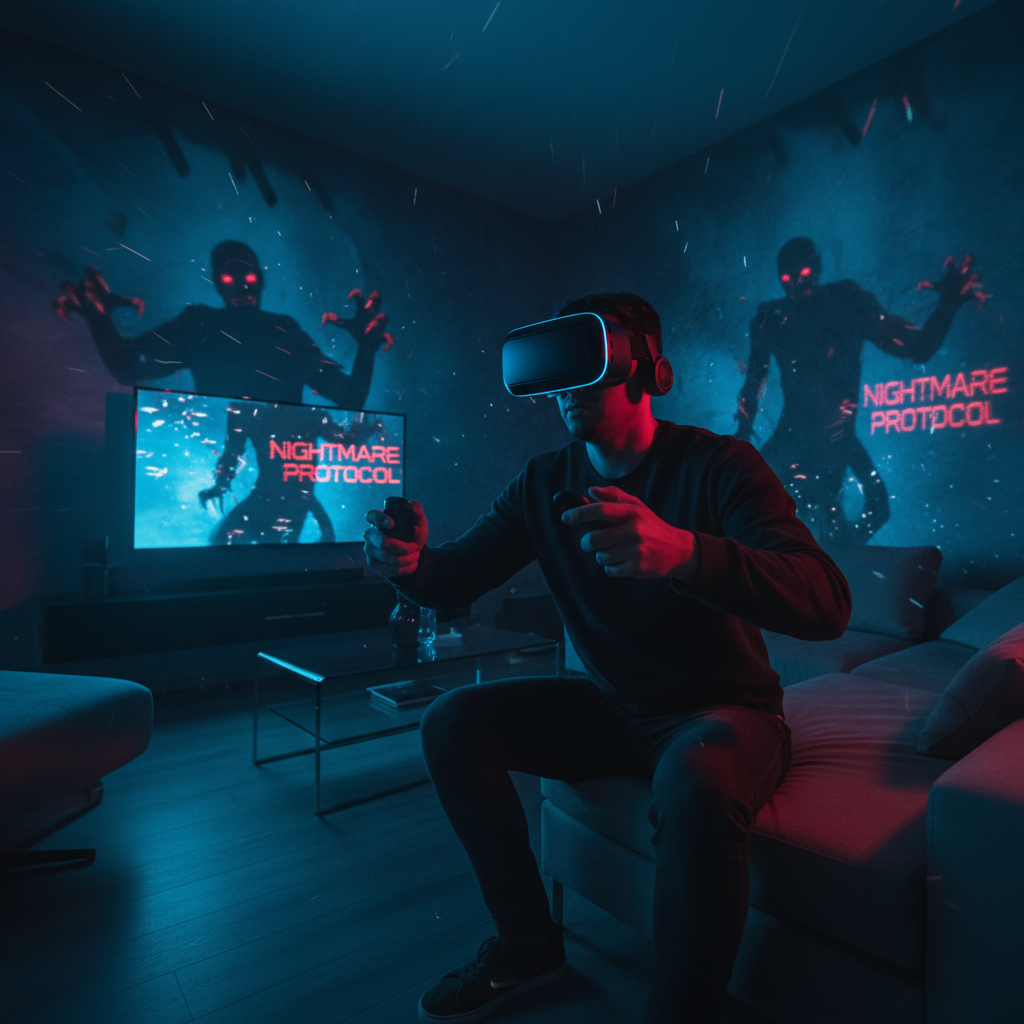
This guide keeps it practical: what to play for pure dread vs action-horror, what works best on PS VR2 vs Quest vs PC VR, and how to avoid the two common deal-breakers, motion sickness and “I’m too stressed to keep going.”
Key takeaways: match scare style to your tolerance, prioritize comfort settings, and use platform-exclusive strengths instead of chasing whatever looks viral.
How we’re judging “best” VR horror in 2026 (so the picks make sense)
People argue about “best” like it’s one score, but VR horror has tradeoffs. A game can be terrifying and still be a bad fit if the locomotion makes you queasy, or if the interaction feels clumsy under pressure.
- Fear style: slow-burn dread, jump-scare heavy, psychological, survival horror, or action-horror.
- Comfort: teleport vs smooth move, snap turn options, seated play, vignette, adjustable movement speed.
- Interaction: reloading under stress, inventory handling, melee feel, door and drawer physics.
- Production quality: audio mix, lighting, performance stability, save system reliability.
- Time-to-fun: how quickly you get into “good scary,” not just a long tutorial.
According to the American Academy of Ophthalmology, VR use can cause symptoms like eye strain or discomfort for some people, so comfort features and play breaks matter more than most reviews admit.
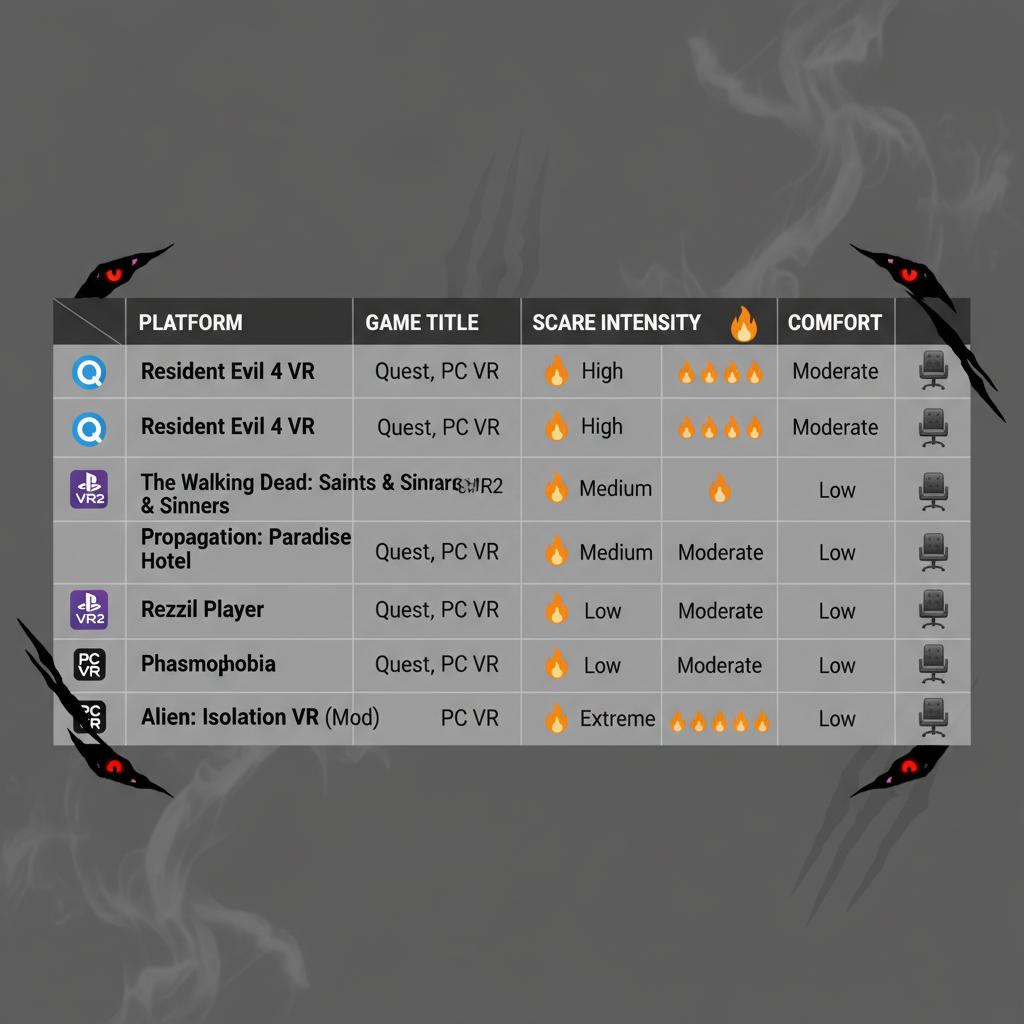
Quick comparison table: best VR horror games 2026 by platform and vibe
If you want the short list first, use this table to narrow your options, then jump to the scenario-based recommendations below.
| Game | Best for | Scare intensity | Comfort notes | Platforms |
|---|---|---|---|---|
| Resident Evil 4 VR | Action-horror with great pacing | High | Lots of comfort toggles, still intense | Quest |
| Resident Evil Village VR | High-end visuals and set pieces | High | Smooth locomotion may challenge beginners | PS VR2 |
| The Walking Dead: Saints & Sinners | Survival crafting + melee tension | Medium-High | Arm-swing + comfort settings help | Quest, PC VR, PS VR |
| Phasmophobia (VR mode) | Co-op investigation and panic moments | Medium | Comfort varies by settings and playtime | PC VR |
| Five Nights at Freddy’s: Help Wanted | Short bursts of fear, party-friendly | Medium-High | Stationary gameplay is easier on stomach | Quest, PS VR, PC VR |
| Into the Radius | Lonely, atmospheric survival shooter | Medium | Long sessions can fatigue new players | Quest, PC VR |
Best picks by what you actually want to feel
Here’s the honest part: most people don’t want “scariest possible.” They want the right kind of scary, the one that keeps them playing.
If you want blockbuster horror with real polish
- Resident Evil Village VR (PS VR2): big scenes, strong sound design, and the kind of “I can’t believe I’m in here” scale that sells VR horror.
- Resident Evil 4 VR (Quest): more kinetic, less slow-burn, but the pacing stays tight and replayable.
In a “best vr horror games 2026” conversation, these two often sit near the top because they feel like complete games, not just scary rooms stitched together.
If you want survival horror tension, not constant jump scares
- The Walking Dead: Saints & Sinners: slow panic when resources run thin, with hands-on interaction that feels stressful in a good way.
- Into the Radius: eerie isolation, methodical looting, and a vibe that creeps in over time.
If you want co-op screams and social chaos
- Phasmophobia (VR mode): the fear comes from coordination breaking down, someone forgetting the plan, and the sound design doing the rest.
Co-op VR horror can be less “I’m paralyzed in fear” and more “I’m laughing because I’m terrified,” which is a big reason it stays in rotation.
If you want shorter sessions that still spike your heart rate
- Five Nights at Freddy’s: Help Wanted: bite-size scenarios, lots of anticipation, and easier to play in 10–20 minute chunks.
Self-check: which VR horror type fits you (before you buy)
This is the part most lists skip. A “top 10” doesn’t help if you bounce off VR horror after 15 minutes.
- You get motion sick in VR sometimes: lean toward stationary or teleport-friendly horror, or titles with aggressive comfort options.
- You hate being chased: pick investigative or atmospheric games, avoid constant pursuit loops.
- You freeze under pressure: avoid complex weapon reloading at first, choose simpler interactions.
- You want control: look for games with difficulty sliders and strong accessibility menus.
- You’re a horror veteran: prioritize audio and environmental storytelling, jump scares alone won’t carry it.
If your goal is finishing a game, not just sampling fear, this quick check saves money and frustration.
Comfort and safety setup that makes VR horror playable
VR horror is one of the easiest genres to overdo. The headset blocks your usual “I’m safe” signals, and your body can interpret that as stress.
- Start with short sessions: 15–25 minutes can be enough early on, then build up.
- Use comfort options on day one: snap turning, vignettes, slower movement speed, and seated mode when offered.
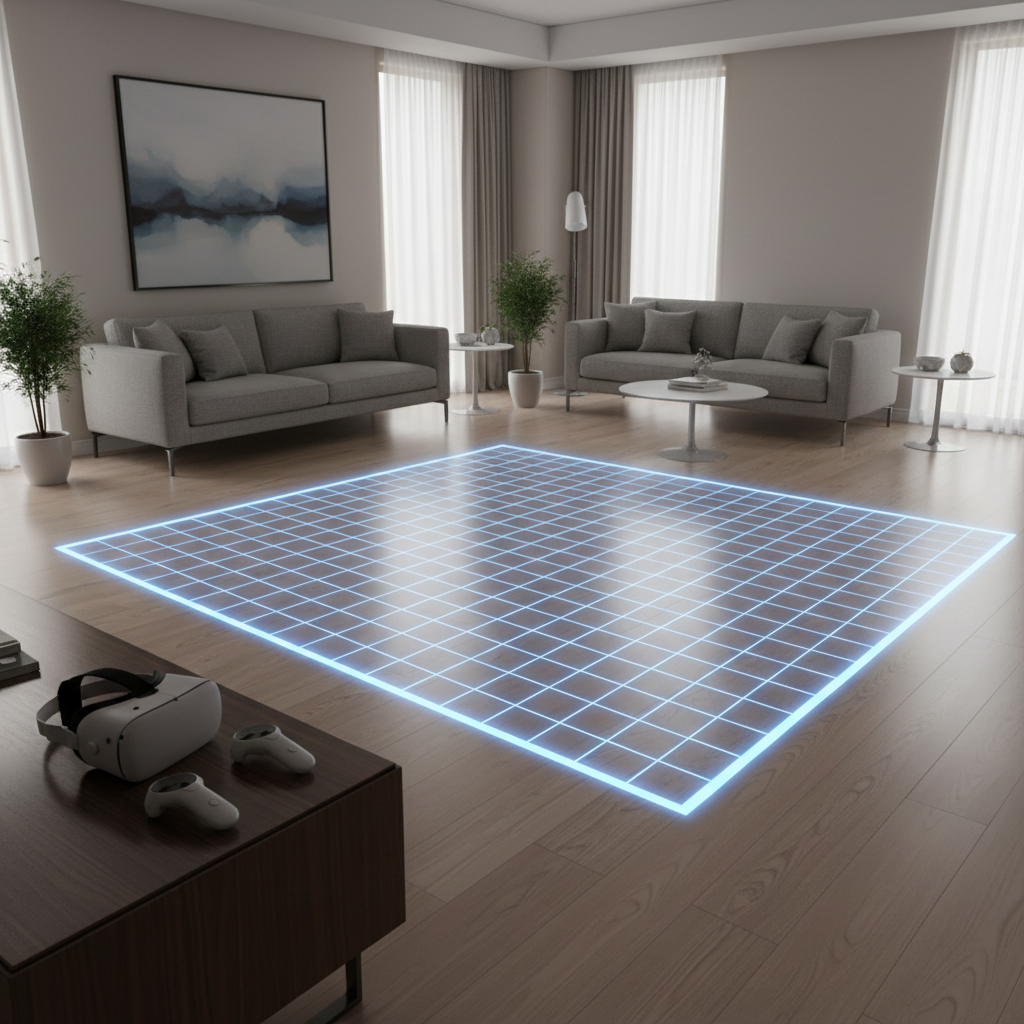
- Anchor your play space: a small mat under your feet helps orientation and reduces drift anxiety.
- Audio matters: use headphones, but keep volume reasonable so you don’t fatigue faster.
- If you feel nauseated: stop and take a break, pushing through often makes it worse. If symptoms persist, consider consulting a medical professional.
According to the U.S. Consumer Product Safety Commission, keeping a clear play area helps reduce impact injuries, which matters more in horror because you flinch, step back, or swing your arms without thinking.
Common mistakes that ruin VR horror (and how to dodge them)
A lot of “this game isn’t scary” reviews come from setup or expectation mismatches, not the game itself.
- Cranking difficulty immediately: in VR, difficulty often increases stress more than fun, especially when aiming or reloading is physical.
- Ignoring brightness and contrast: some headsets run dark, so adjust in-game gamma so you can read the room without flattening the mood.
- Playing tired: fatigue makes motion discomfort and anxiety spikes more likely.
- Buying the scariest thing first: if you bounce off once, you might avoid the genre entirely, so ramp up gradually.
When people search best vr horror games 2026, they’re often chasing intensity, but consistency and comfort are what keep the headset on.
Practical “what should I play next?” paths
If you want a simple plan instead of endless scrolling, pick the path that matches your tolerance.
Path A: New to VR horror, want manageable scares
- Start with Five Nights at Freddy’s: Help Wanted for short, controlled sessions
- Move to Phasmophobia with friends for shared tension
- Graduate to The Walking Dead: Saints & Sinners when you trust your VR legs
Path B: You want premium single-player horror right now
- PS VR2: go straight to Resident Evil Village VR
- Quest: start with Resident Evil 4 VR
- PC VR: prioritize performance stability, then add co-op via Phasmophobia
Path C: You want slow dread and immersion over jump scares
- Begin with Into the Radius for atmosphere and routine-based tension
- Then try Saints & Sinners for higher-pressure encounters
Conclusion: picking the best VR horror game in 2026 comes down to fit
The best VR horror games in 2026 tend to be the ones that respect your comfort, deliver believable interaction, and match the kind of fear you actually enjoy, not just the kind you brag about surviving.
If you do one thing after reading this, use the self-check list, pick a “path,” and commit to short sessions for the first week, you’ll usually get more out of your purchase and avoid the classic motion-sickness spiral.
If you’re shopping for a new headset or trying to decide between Quest, PS VR2, and PC VR specifically for horror, a quick checklist of your room setup, comfort needs, and preferred scare style can save hours of guessing.